Tell us about the job
Takes about a minute. No obligation.
Sizing a heat pump for this county is not a generic exercise. A contractor has to establish the full heating load the house places on the system before anything else, because heat pump capacity drops as outdoor temperatures fall and a unit that runs close to its ceiling every cold night accumulates wear on the compressor and the refrigerant circuit far faster than one with room to spare. Homes in Cumberland County, NJ run heat about seven months a year, from October through April. That is the load a correctly sized install is built around, and a contractor quoting this job works out heat loss, insulation, and whether back-up resistance heat is needed before settling on equipment.
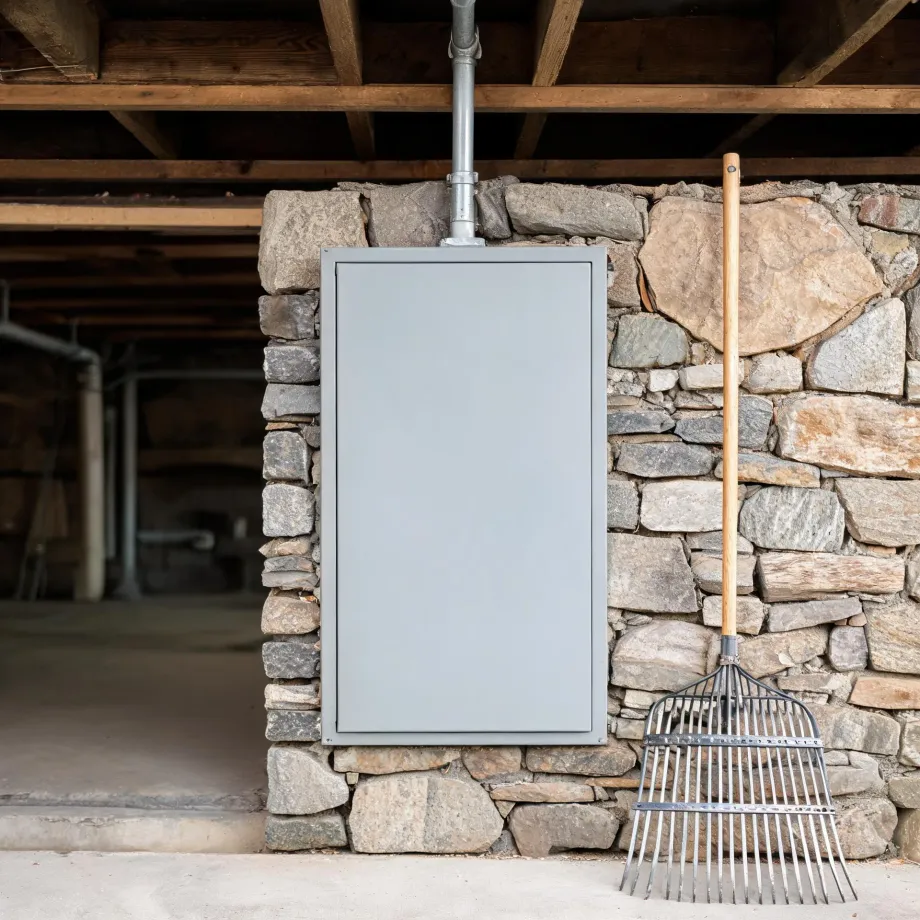
Ductwork laid out for a furnace or a boiler does not automatically carry a heat pump's air distribution requirements. The routing, the sizing, and the return-air configuration all bear on whether the existing system of ducts can handle the new load or has to be modified. Half the homes in Cumberland County, New Jersey were built in 1969 or earlier (2020-2024 ACS 5-year). That share of the housing stock was built around equipment and installation practices that predate heat pumps as a common residential choice, which means the duct layout a contractor finds inside a typical house here reflects a different set of priorities than the ones a heat pump imposes. The electrical service tells a parallel story: panels in that era of construction were not sized for the draw a modern heat pump compressor puts on the supply. Both the ductwork and the electrical get assessed before a quote means anything.
What Gets Installed With a New Heat Pump
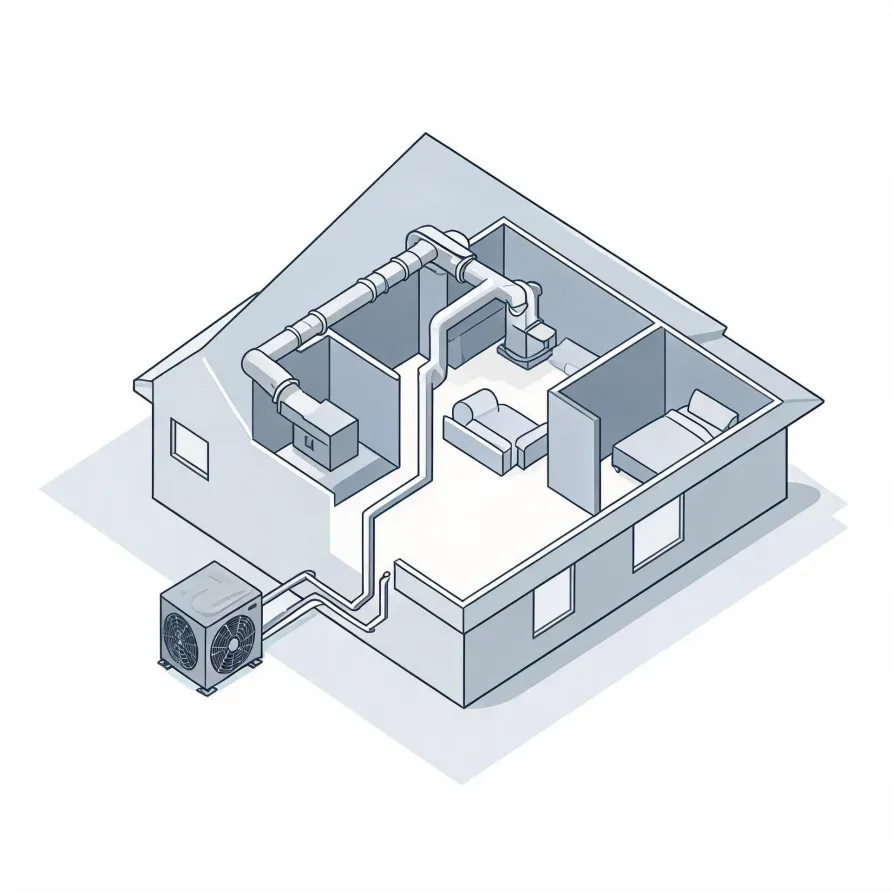
The outdoor unit is the piece most homeowners notice first. It sits on a pad outside the house and holds the compressor and the condenser coil, which together do the main work of moving heat between the refrigerant and the outside air. The indoor air handler mounts in a utility space, closet, or attic and pushes conditioned air through the home.
A refrigerant line set runs between the two units, carrying refrigerant through insulated copper tubing that gets routed along the exterior wall or through a small penetration in the building envelope. The thermostat, mounted on an interior wall, is what the homeowner uses to set temperatures and, on most modern systems, control operating modes.
The drawing shows a typical layout, and a licensed contractor determines exactly how each piece is positioned and connected in your home.
Get matched in Cumberland CountyCumberland County, by the numbers
105 severe weather events were recorded in Cumberland County, New Jersey between 2015 and 2024.
NOAA National Centers for Environmental Information, Storm Events Database, bulk CSV export, events 2015-01-01 through 2024-12-31.Half the homes in Cumberland County, New Jersey were built in 1969 or earlier (2020-2024 ACS 5-year).
U.S. Census Bureau, 2020-2024 American Community Survey 5-Year EstimatesCumberland County, New Jersey holds 57,282 housing units (2020-2024 ACS 5-year).
U.S. Census Bureau, 2020-2024 American Community Survey 5-Year EstimatesOwners occupy 66.5% of the occupied homes in Cumberland County, New Jersey (2020-2024 ACS 5-year).
U.S. Census Bureau, 2020-2024 American Community Survey 5-Year EstimatesCodes & Standards for Heat Pump Installation in Cumberland County, New Jersey2 sourced rules and standards
Licensing and Legal Requirements in Cumberland County, New Jersey
In New Jersey the HVACR licence is the State's alone: a municipality, local board of health or any other agency may not issue or renew a Master HVACR contractor's licence.
New Jersey requires a Master HVACR contractor licence: no person or business may engage in the business of HVACR contracting, or advertise as a Master HVACR contractor, without being authorised under the State HVACR Contracting License Law.
Severe Weather Events in Cumberland County
Heat pump performance is tied directly to what the climate asks of it, and Cumberland County's weather record shapes how hard that equipment works year over year. Knowing the local load is part of sizing and installing a system that holds up.
105 severe weather events, 2015–2024. Source: NOAA National Centers for Environmental Information, Storm Events Database.