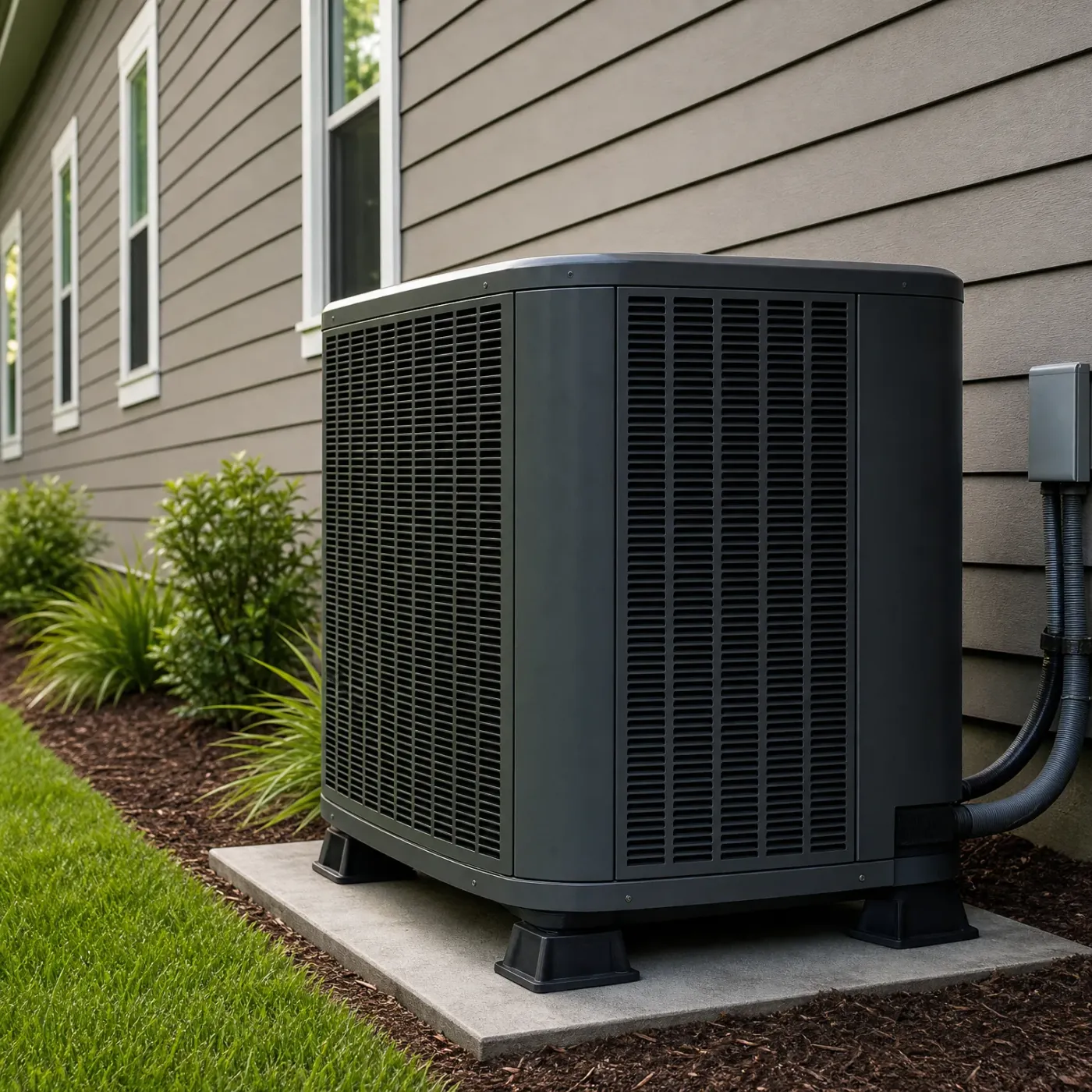
Tell a local repair pro what your heat pump is doing.
A heat pump that won't start in the middle of a New Jersey winter is a bigger problem than the same thing in July. Most houses here heat with gas, but if yours runs on a heat pump, it's probably doing most or all of the work keeping the house warm, and a dead unit means a cold house fast.
There are a handful of reasons a heat pump stops responding. A tripped breaker or blown fuse. A thermostat that lost power or lost its mind. A reversing valve stuck in the wrong position. Ice built up on the outdoor coil with nothing running the defrost cycle. Some of these a homeowner can check in five minutes. Others need someone who works on these systems to open a panel and test with a meter.
Power here costs more than almost anywhere else in the country, which makes a lot of homeowners nervous about running the heat pump's backup strip heat for long. That's a fair worry, but it's also a reason not to guess at the problem or let it sit. A unit that's short cycling, or stuck on backup heat because the compressor won't engage, costs more every day it runs that way.
This is where getting the right person involved matters more than getting someone fast. A contractor who works on heat pumps all year in this area, through the muggy summers and the cold snaps, has seen most of what causes a no-start call like this one. That's different from someone who mostly installs furnaces and takes heat pump calls when they come in.
When you request help through this page, you're matched with one licensed contractor local to your part of New Jersey, not a list of companies competing for your callback. They'll reach out to you directly about what you're seeing with your system.
A heat pump that won't turn on usually comes down to power, the thermostat, or the outdoor unit itself. Start with the breaker. Heat pumps trip breakers more than people expect, especially on a cold morning when the system is working hardest to pull heat out of cold outside air. Check the thermostat next. If the display is blank or it's set to a mode the system doesn't recognize, the unit has no reason to run. Outside, look at the unit itself. Ice built up over the coil, or a fan that isn't spinning, will stop it cold even if everything inside the house looks normal. If power and the thermostat check out and the outdoor unit still won't respond, the problem is likely electrical or in the control board, and that's not something to keep testing on your own. In New Jersey winters, a heat pump that's down for more than a day or two is worth getting looked at before the next cold stretch sets in.
Before you get your heat pump repairAfter you get your heat pump repair
Why cold mornings trip the breaker
A heat pump works hardest right when it's coldest out, pulling heat from outside air that has little to give. That draw on startup is higher than what the system needs once it's running, and an older breaker or a loose connection can't always take it. This is why the no-start call so often comes in on a frigid morning rather than a mild afternoon. It isn't the heat pump failing outright. It's the extra load at the one moment it has the least margin, and a breaker that's been borderline for a while finally gives out.
What the outdoor unit is up against
The outdoor unit sits outside all winter pulling heat from the air, and it relies on a defrost cycle to melt the frost that builds up on its coil. If that cycle isn't working right, ice can cover the coil enough to block airflow and stop the system from running at all. New Jersey winters give that coil plenty of chances to ice over. A unit buried in snow or sitting too close to a wall or fence has even less room to shed that frost on its own.
Matched to your heat pump job
Only one pro gets your request, so you hear from one company.
Say what's going on with your heat pump, and a pro who works on them reaches out.
No charge to send it. You decide if you hire them.
What's actually happening at your thermostat right now
You bump the thermostat up and nothing changes. No air from the vents, no hum from the outdoor unit, maybe a blinking light on the thermostat display or no display at all. Sometimes the outdoor unit is running but the house stays cold, which points somewhere else entirely. If this has happened before and cleared itself, or if the breaker has tripped more than once this winter, that's worth paying attention to. A heat pump that won't start on a cold night leaves you without heat exactly when you need it, and if gas isn't your backup, there's nothing else carrying that load.
New Jersey summers run humid, with a dew point averaging 63°F across June, July and August, according to NOAA climate data. Air that heavy means your heat pump spends the summer pulling moisture out of the house as much as it pulls out heat, and that extra load adds up. If the system is already low on refrigerant or the outdoor coil is dirty, a sticky July is when you'll feel it most, with weak airflow, a house that feels clammy even when the thermostat says it's cool, or a unit that runs long stretches without shutting off. Catching that strain early, before a hot stretch pushes a weak part past the point of starting at all, is easier than dealing with a heat pump that won't turn on when you need it most.
NASA POWER T2MDEW county cells weighted by homes
Call now or give it a day
Call now
A heat pump that's dead in January leaves the house without heat unless you have gas backup or a separate furnace.
Breakers that trip once tend to trip again, and each time it happens on a cold morning the strain on the system is worse.
Waiting on an electrical issue in the outdoor unit risks the compressor, which costs far more to replace than a breaker or capacitor.
A contractor who works on heat pumps through a New Jersey winter has likely seen the same failure on the same kind of cold morning before.
If the thermostat is blank or unresponsive, that's worth a same-day look rather than a guess at what setting might fix it.
Watch and wait
If the system stops for a few minutes on a mild day and comes back, that's worth noting but not necessarily urgent.
A single tripped breaker that resets clean and holds can be a one-off, especially after a power blip rather than a cold snap.
If gas heat is carrying the house and the heat pump only handles the shoulder months, a short delay costs less comfort.
Checking the thermostat batteries and the breaker yourself first can rule out the simplest causes before anyone needs to come out.
A unit that's blowing air but not getting warm is a different problem than one that won't start at all, and it's less urgent.
1
Thermostat calls for heat and sends a low-voltage signal outside.
2
Contactor in the outdoor unit should pull in to close the circuit.
3
Compressor and outdoor fan motor draw power through that closed contactor.
4
Reversing valve shifts to pull heat from the outside air.
Call a licensed local contractor
Someone who works on heat pumps all year in New Jersey knows what a tripped breaker, a bad contactor, and a dead thermostat each look like, and which one you've got.
If it trips again, you're no closer to an answer and the house is still cold, with the compressor taking the kind of strain that leads to a bigger repair.
Power costs 22.48 cents per kilowatt-hour statewide
At 22.48 cents per kilowatt-hour, a heat pump that's cycling on and off or running flat out to fight a bad part isn't a small add to the bill. If yours has been acting up before it quit, you've likely already paid for that in a few higher bills.
EIA-861 2025 statewide residential average
A dead heat pump has a cause, and it's findable
A breaker, a contactor, a thermostat, a part in the outdoor unit. Whichever one it is, it's a specific thing with a specific fix, not a mystery. Catching it now, instead of waiting to see if it starts working again on its own, is the same instinct that's kept the rest of the system running this long.
Getting the right person on it matters as much as getting someone on it fast. A contractor who works on heat pumps through a New Jersey winter has seen this exact failure before, more than once, and knows what to check first. You'll be matched with one licensed contractor local to you, not a handful of companies competing for the job, and that person will reach out to go over what's going on with your system.