







Profile view of a bearded man wearing a dark baseball cap and a dark gray T-shirt against a plain off-white background.

Why your heat pump runs nonstop in a New Jersey winter

Step 1 of 3: Equipment

A heat pump that runs nonstop in a New Jersey winter is usually just doing its job on a cold day. Below about 35 degrees, a heat pump has to pull harder to get the same warmth out of the air, so it runs longer cycles, sometimes without stopping, to keep the house at temperature. On the coldest nights that's normal. What's not normal is when it runs nonstop and the house still feels cool, or when you notice ice building up on the outdoor unit and it isn't clearing itself during the defrost cycle. That points to something else: low refrigerant, a failing defrost control, a dirty outdoor coil, or a system that was undersized for the house to begin with. Left alone, a heat pump straining like that keeps drawing power without keeping you warm, and that shows up fast given what electricity costs here. Worth having someone look at it before the next cold snap rather than after.

A gray outdoor condenser unit on a concrete pad beside a light green lap-sided house, with a wall-mounted electrical disconnect box, mulch bed with shrubs, river rock, and a paved walkway in the foreground.
A clean heat pump like this one can still run long in January, but it cycles off once the house reaches temperature.
An outdoor air conditioner condenser unit on a concrete pad beside a house with beige vinyl siding, with a gray electrical disconnect box and insulated refrigerant lines on the wall and river rock to the right.
Coil fins packed with dirt and leaves block airflow, so the unit runs nonstop and still falls short of the thermostat setting.

A heat pump works harder as the air outside gets colder, because there's less heat in that air to grab. Once temperatures drop below 35 or so, the compressor often just stays on rather than shutting off and restarting. That alone explains a lot of nonstop running. On top of that, the outdoor coil frosts up in cold, damp weather, and the system has to pause heating to run a defrost cycle, reversing briefly and running a small heater to clear the ice. The indoor fan usually cuts off during this so you don't feel cold air blowing. Most homes here also have backup heat, either electric strips or a gas furnace, meant to take over once it gets into the 20s or colder. If that backup isn't kicking in when it should, the heat pump ends up trying to heat the whole house alone, which it isn't sized to do for long. A thermostat that doesn't hold temperature properly after a defrost cycle can make the system run even longer trying to catch back up.

What's actually happening inside the system

  • Below 35 degrees the outdoor coil can't pull as much heat from the air, so the compressor stays on instead of cycling off.
  • A defrost cycle kicks in on its own when frost builds on the outdoor coil, reversing the system briefly and running a small heater to melt the ice.
  • During defrost the indoor fan usually shuts off so cold air doesn't blow through your vents while the outdoor coil clears.
  • Many New Jersey systems pair the heat pump with electric resistance strips or a gas furnace that kicks in once outdoor temps drop into the 20s or lower.
  • If that backup heat isn't switching on when it should, the heat pump is left to cover the whole load by itself and runs far longer than it needs to.
  • A thermostat set to resume heating mode after defrost, instead of holding, can leave the system catching up for a long stretch afterward.
A woman in a cream cowl-neck sweater sits by a window with snow outside, in a dimly lit living room with a sofa, lit lamp, mirror, candles and a fireplace.
A woman in a gray turtleneck sweater sits beside a large window looking out at snow-covered evergreen trees, in a dimly lit living room with a lit fireplace, lamps, couch and houseplant.
A woman in a cream turtleneck sweater stands beside a large window with snow-covered ground and bare trees outside, in a dimly lit living room with lamps, a sofa and framed art.
A woman in a grey cowl-neck sweater stands indoors near a window, looking out at falling snow, with a lamp, framed picture and couch in the warmly lit room behind her.
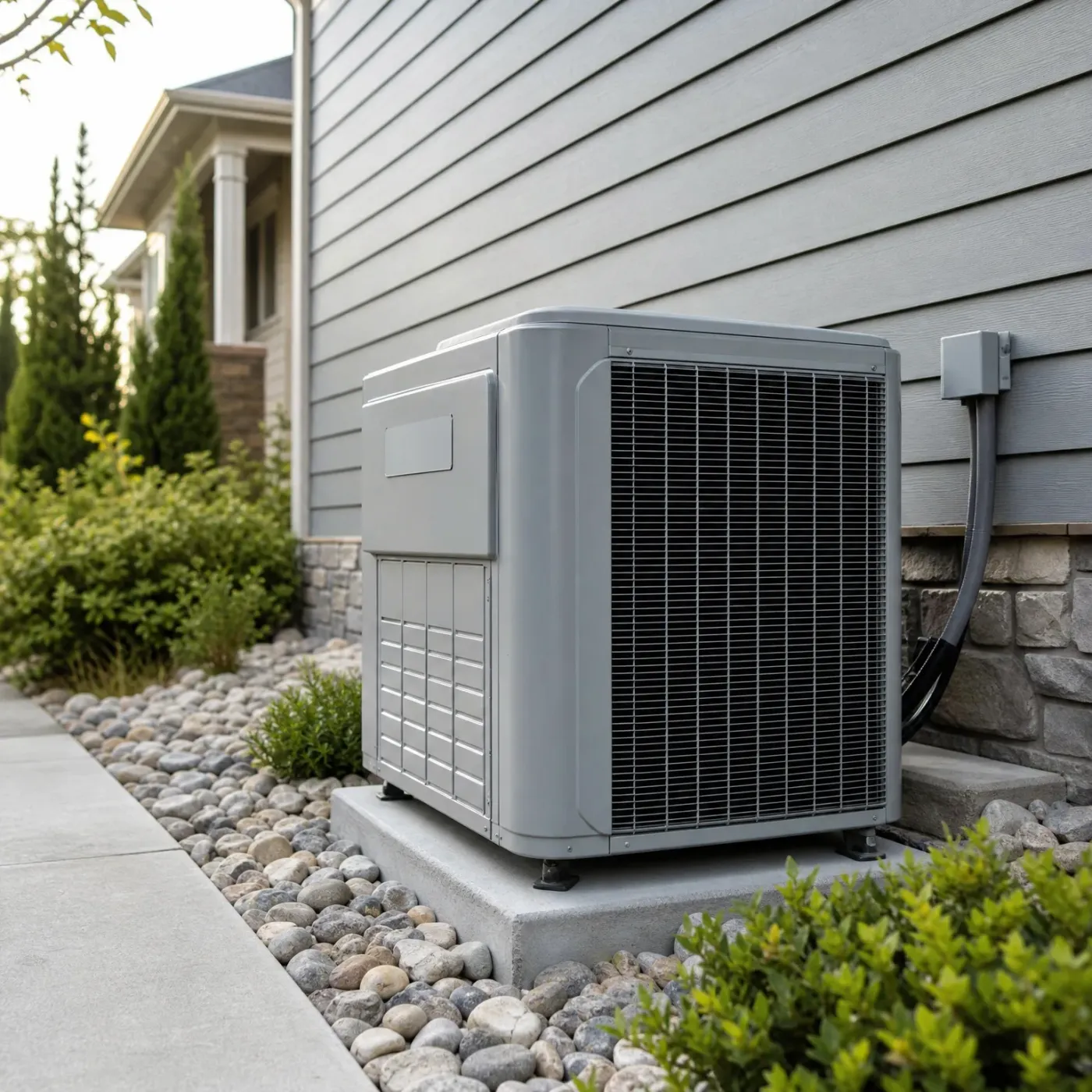
A gray outdoor heat pump unit on a concrete pad beside a house with light gray horizontal lap siding and a stone base, surrounded by river rock and shrubs next to a concrete walkway.

Get the right pro for your heat pump

Fill out one short form instead of calling around.

A local pro who knows heat pumps gets your details and gets in touch.

Fill out one form

No fee to send it, and nothing to sign.

Is your heat pump keeping up or just running?

Put a hand over the supply vents. If the air feels warm and the house is holding near the thermostat setting, the system is working the way it should on a cold day. If the air feels barely warm, or cool, and the thermostat number won't climb, the unit is running without catching up. Check the outdoor unit too. Some frost after a defrost cycle is normal. A thick layer of ice that doesn't clear, or a coil caked with dirt and leaves, means it can't pull heat from the air the way it needs to. Left alone through a full New Jersey winter, that forces the backup heat strips to carry more of the load, and the electric bill climbs with them.

A gray outdoor condenser unit on a concrete pad beside a house with horizontal lap siding, connected by conduit and lines to a wall-mounted disconnect box, with a shrub and gravel bed to the left.

Running hard but keeping up

The unit outside is working the way it's built to on a cold day. Indoors, the air coming out of the vents is warm, the house holds near the thermostat setting, and the long runtime is just the system doing its job in the cold.


An outdoor air conditioner condenser unit on a concrete pad beside a light gray vinyl-sided house, with an electrical disconnect box and conduit on the wall and bare soil in the foreground.

Running and losing ground

The unit outside is running the same way, but indoors the house is drifting a few degrees below the thermostat setting no matter how long it runs. That gap is the sign something needs a look before the next cold snap makes it worse.

A bearded man in a plaid flannel shirt stands indoors looking out a window at snow-covered conifers, with a ceramic mug on the wooden sill and wooden cabinets behind him.
A bearded man in a navy T-shirt sits on a light-colored couch indoors, smiling while looking down at a laptop screen in the foreground, with a framed picture and a potted plant blurred behind him.

Power costs 22.48 cents per kilowatt-hour statewide

At 22.48 cents per kilowatt-hour, every extra hour your heat pump runs nonstop adds up fast on the bill. A unit that's struggling instead of just working hard in the cold can turn a normal January power bill into a surprise.

EIA-861 2025 statewide residential average

Working hard or working wrong

  • Long runtime on a cold day is normal; long runtime with a cold house or a thermostat that never gets reached is not.
  • A heat pump that cycles off once the house hits temperature is doing what it should, even in January.
  • A unit running nonstop while falling short of the setting points to a problem worth having checked before it gets worse.
  • Dirty coil fins, a stuck defrost cycle, or a low refrigerant charge can all turn a hard-working system into one that's struggling.
  • Skip calling around to different contractors, repeating the same symptoms each time, and sorting through quotes on your own.
  • A contractor who knows New Jersey winters can tell you in one visit whether your heat pump is working hard or just failing.

A cold snap in New Jersey will push any heat pump to run long. That part is normal and it is not a reason to worry. What matters is what the house does while the unit runs. If the rooms hold near the thermostat setting, the system is doing its job, even if it never seems to shut off. If the house stays cold, or the air from the vents feels barely warm, the unit is working without getting anywhere, and that is a different problem. Dirty coil fins, a defrost cycle that will not reset, a low refrigerant charge, any of these can turn a system that should be keeping up into one that is just spinning its wheels on electricity that costs more here than in most of the country. The difference between the two is easy to miss on your own, because both look the same from the couch. It is not easy to tell by ear or by guesswork, and getting it wrong means another month of high runtime before anyone looks at it. Instead of calling a handful of contractors, explaining the same symptoms to each one, and weighing quotes that may not even be answering the same question, you can have someone who works on heat pumps in this climate take a look once and tell you straight whether the system is handling the cold or losing the fight against it.

Interior room corner with sunlight from a window, showing peeling paint and damaged plaster on the wall above a white baseboard, a wooden cabinet with a pale bowl on top, hardwood floor and a patterned rug.
Interior corner of a room with tan walls, white profiled baseboard and window trim, a wood-plank floor in sunlight, and green foliage visible through the window.
An empty room corner with cream walls, white baseboard, two windows with deep sills showing green foliage outside, and a wood plank floor lit by sunlight.
Empty room corner with beige walls, white beadboard wainscoting, chair rail and baseboard, a window with green foliage outside, and sunlight casting leaf shadows on the wall above a wood floor.
Sunlit room corner with a multi-pane window, beige walls, white baseboard, wood floor with a woven rug, and a dark wooden cabinet holding a ceramic table lamp below a framed picture.

A pro who works on heat pumps

Explain the job once and skip repeating it on every call.

Skip the search

Sending the form costs nothing.





