Why your heat pump makes noise in a New Jersey winter

Step 1 of 3: Equipment

A loud or rattling heat pump in winter is usually doing one of two things: running a defrost cycle or struggling with ice on the outdoor coil. New Jersey winters bring enough cold, damp air that frost builds up on that coil during normal heating runs. The system has to switch into defrost mode to melt it off, and that's when you hear the hiss or whoosh, sometimes with a burst that sounds like a woosh of steam. A thump or buzz when it kicks into defrost is normal. Grinding, squealing, or a rattle that keeps going once the cycle ends is not. That usually points to a failing motor, a loose panel, or ice that isn't clearing the way it should. Left alone, a coil that keeps icing over forces the unit to work harder and can leave you without heat on a cold night. Catching it early, before it turns into a bigger repair, is the difference that matters.

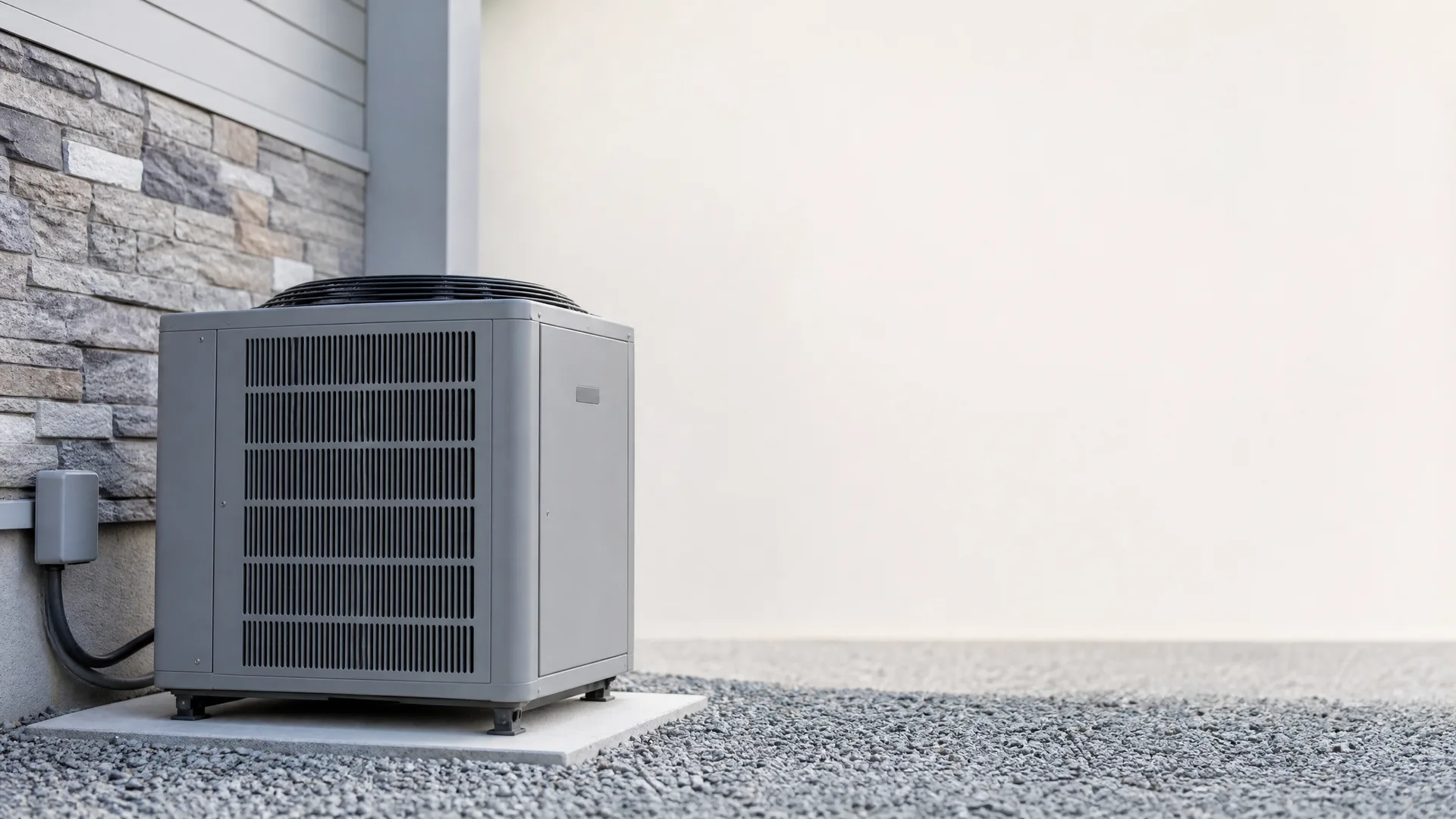
A gray outdoor condenser unit on a concrete pad beside a house with stacked stone and horizontal siding, surrounded by gray gravel and a plain light wall.

What defrost sounds like

When a heat pump switches into defrost, it reverses itself for a few minutes to melt frost off the outdoor coil. You might hear a whoosh or a hiss as the refrigerant flow reverses, then a drop in fan noise as the outdoor fan slows or stops. Some units click or clunk when the reversing valve shifts. None of that means failure. It's the system doing what it's built to do on a cold, damp New Jersey night.

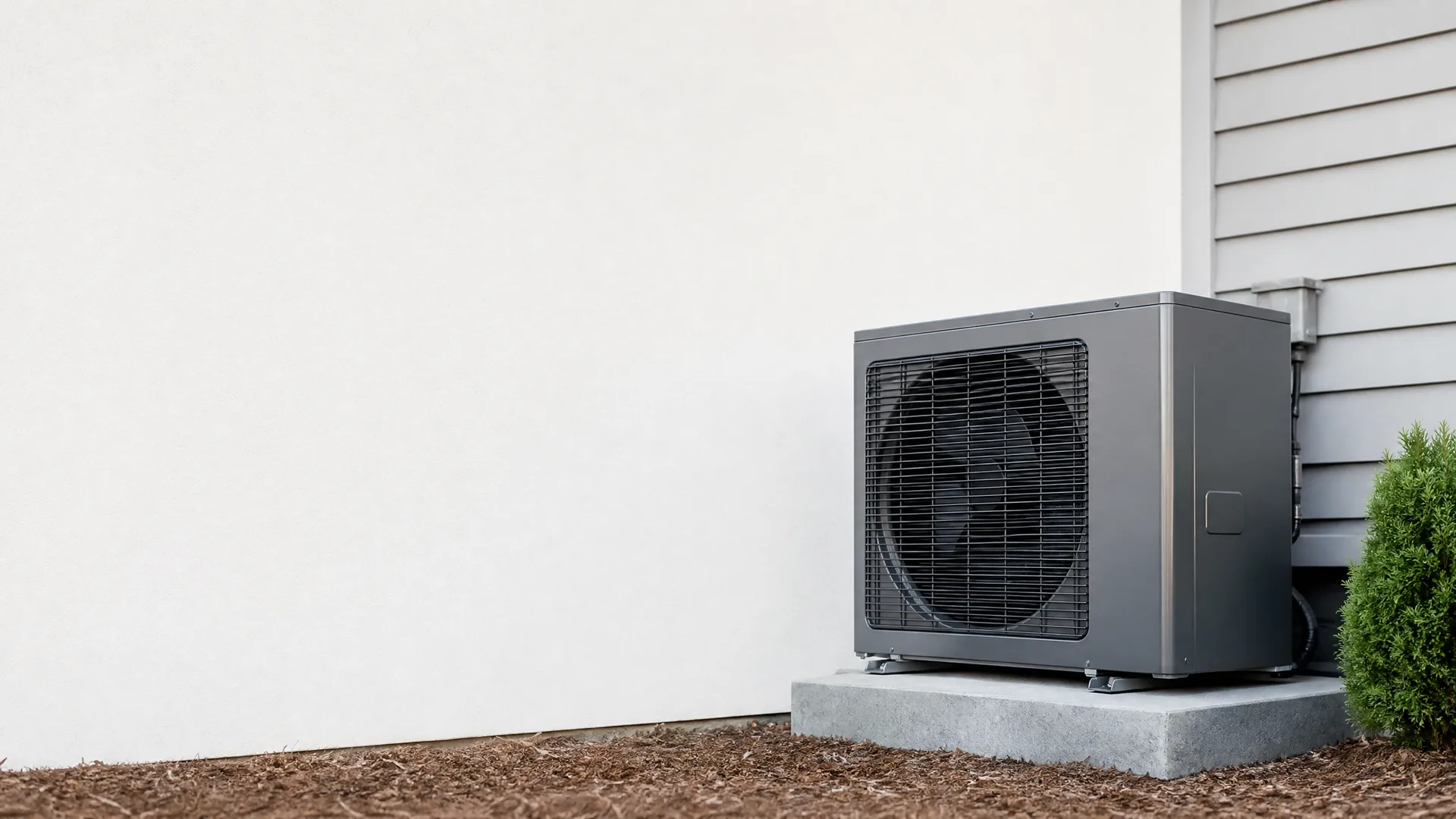
A dark gray outdoor heat pump unit sits on a concrete pad beside a white stucco wall and lap-sided house corner, with mulch and a small shrub in the foreground.

When the noise means ice

A heat pump that's buzzing or straining and never seems to shed frost is a different problem. If the outdoor coil stays coated in ice well after a defrost cycle should have cleared it, something is keeping the system from defrosting properly, a stuck reversing valve, a bad sensor, or low refrigerant charge. Ice that builds across the whole coil instead of melting back cuts airflow and makes the compressor work harder, which is where the grinding or straining sound comes from.

Normal Defrost or a Real Problem

Normal defrost noise

  • The sound starts and stops on its own, usually within ten to fifteen minutes, and the system goes back to heating.
  • You'll hear a whoosh or hiss as the reversing valve shifts, then the outdoor fan slowing down or stopping.
  • Steam or light fogging off the outdoor unit right after the noise stops is just melted frost, not a leak.
  • It tends to happen more often on the coldest, wettest New Jersey nights, since that's when coil frost builds up fastest.
  • The noise doesn't get louder over repeated cycles, and the unit runs quietly again between defrosts.

Something wrong with the unit

  • The noise keeps going well past fifteen minutes, or the outdoor fan never comes back on afterward.
  • You hear grinding, squealing, or a hard clunk, not the whoosh and hiss of a normal reversing valve.
  • Ice coats the coil thick and doesn't clear even after a defrost cycle runs.
  • The sound gets worse night after night instead of staying the same.
  • Warm air from the vents turns noticeably cooler or stops showing up on schedule.
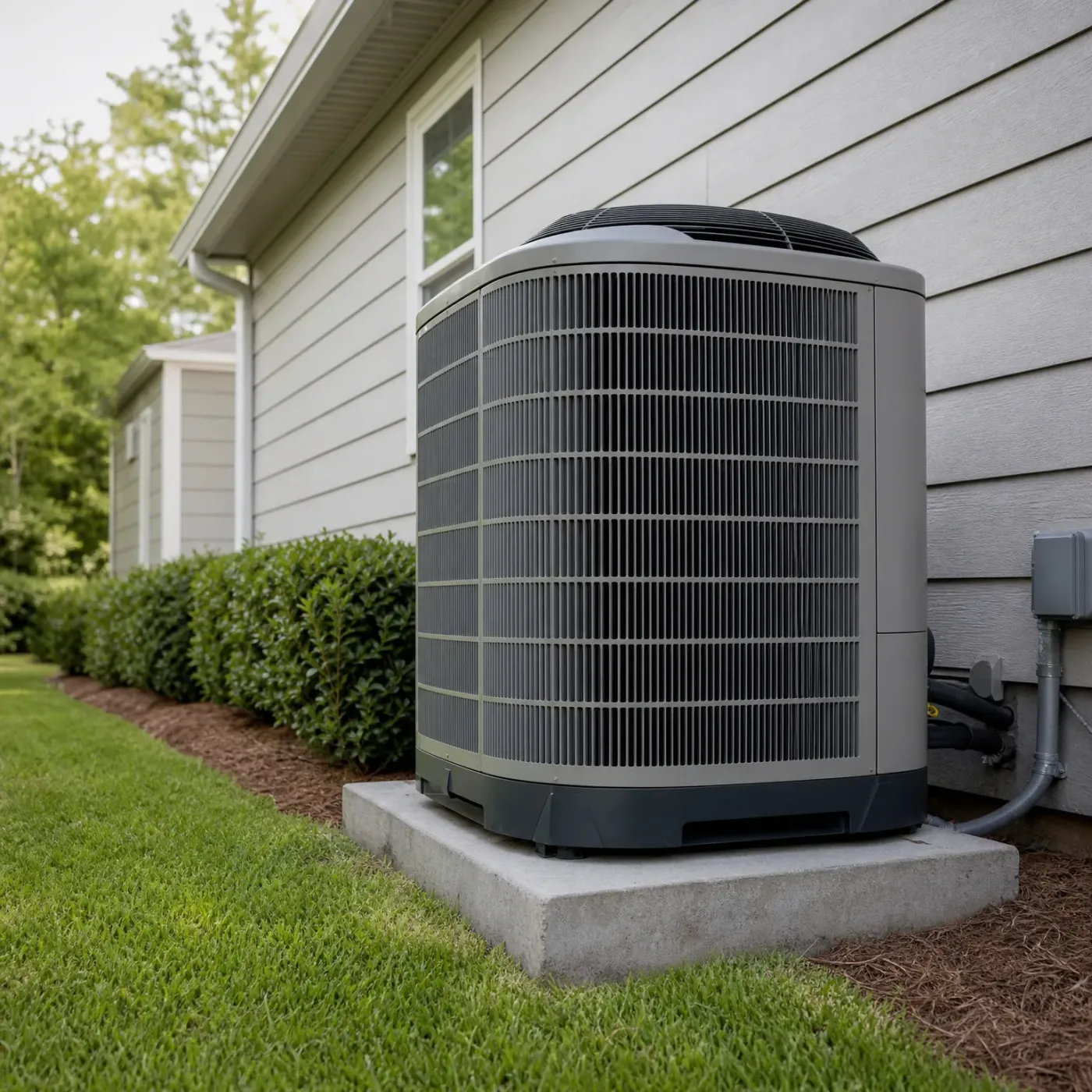
A beige outdoor air conditioning condenser unit on a concrete pad beside a house with horizontal vinyl siding, with refrigerant lines and a disconnect box on the wall, surrounded by dark mulch and a green shrub at left.

Running normally

This is what a heat pump looks like most of the winter, sitting on its pad, fan turning, coil doing its job. It cycles on and off and runs defrost every so often without you noticing. No rattle, no grinding, no ice climbing up the sides.

An outdoor air conditioner condenser unit on a concrete pad beside a house with horizontal lap siding, with a shrub to the left, bare dirt in front, and conduit and a metal disconnect box on the wall.

Something's wrong

Thick ice covering the cabinet, a grinding or screeching sound, or a unit that won't stop running means it's not just defrosting. Left alone through a New Jersey cold snap, that strain on the compressor or fan motor turns a small repair into a bigger one.

What are you hearing out there right now

Go to the window and listen. If it's a whoosh followed by the fan slowing down, that's defrost doing its job. But if you're hearing a rattle that wasn't there last winter, a grinding that comes and goes, or a clanking that gets louder when the fan speeds up, something's loose or wearing out inside the unit. Look at the coil too. A thin coat of frost that melts away within fifteen minutes is normal. Ice that's climbed up the sides, or a block that's still there an hour later, means the unit isn't defrosting the way it should. Left alone through a New Jersey winter, that ice keeps the coil from pulling heat from the outside air, so the system runs longer to keep up, and your electric bill carries the difference.

A smiling man in a dark blue T-shirt sits on a light gray sofa in a living room with a wooden shelf and window behind him, with a laptop edge visible in the foreground.
A bearded man in a plaid flannel shirt sits indoors looking out a window at snow-covered trees, with a steaming mug on the sill and wooden kitchen shelves behind him.
An outdoor condenser unit on a concrete pad beside a light-colored lap-sided house, with a trimmed hedge, mulch bed and mowed lawn nearby and an electrical box and conduit on the wall.

Finding a pro stops being your job

Describe what your heat pump is doing once, in one form.

After you send the request, you're done searching.

Describe it once

You only hire the pro if you want to.

A smiling man in a navy long-sleeve shirt sits at a wooden table in a kitchen and dining area, with a ceramic mug, a potted plant, and a sliding glass door behind him.
A smiling bearded man in a green henley shirt stands at a kitchen island with a gray mug, looking off to the side, with a dining area and shelves blurred behind him.
A smiling bearded man in a navy sweater sits at a white kitchen island with a ceramic mug, with open shelves, potted plants and a range hood behind him.
A smiling man in a dark olive long-sleeve shirt sits in a kitchen beside a counter with a dark mug, with a dining table, sideboard and hallway visible in the blurred background.

Six things tend to be behind a heat pump noise that worries you. The reversing valve is the part that sends refrigerant backward to start defrost, and when it's going bad it can stick halfway and buzz instead of shifting cleanly. The outdoor fan motor has a bearing, and a worn one grinds or whines at a steady pitch, running whether or not the unit is in defrost. Sheet metal panels on the cabinet can work loose over time and start rattling against the fan's vibration, especially on a windy night. A compressor near the end of its life sometimes announces itself with a hard clunk on startup instead of the usual soft hum. If frost is building up faster than defrost can clear it, the ice cracks and drops off in chunks, a sound different from a unit defrosting the way it should. And a coil that's bent or caked with dirt makes the fan push harder against blocked airflow, which comes through as a louder, strained hum rather than a quiet whirr. Each of these has its own sound and its own fix, and a contractor who hears it in person can usually tell which one you're dealing with.

What's actually making that sound

  • The reversing valve is what sends refrigerant backward into defrost mode, and a failing one can stick halfway and buzz loudly.
  • An outdoor fan motor with a worn bearing will grind or whine at a steady pitch, not just during defrost like normal frost noise.
  • Loose sheet metal panels on the outdoor unit rattle with the fan's vibration and get worse as wind picks up.
  • A compressor nearing the end of its life sometimes makes a hard clunk when it kicks on, different from the softer hum of a healthy one.
  • Ice that builds up faster than defrost can clear it will crack and fall in chunks, making a noise you won't hear from a unit defrosting normally.
  • A bent or dirty outdoor coil forces the fan to work harder against restricted airflow, which shows up as a louder, strained hum.
An outdoor air conditioning condenser unit on a concrete pad beside a house with horizontal siding above a brick foundation, with a flexible conduit running to a wall-mounted disconnect box.
Before you get your heat pump repair
An outdoor condenser unit on a concrete pad beside a gray lap-sided house, with an electrical disconnect box and conduit on the wall and shrubs with mulch to the right.
After you get your heat pump repair

Power costs 22.48 cents per kilowatt-hour statewide

A heat pump that's working harder than it should shows up fast on your bill at 22.48 cents per kilowatt-hour. A stuck reversing valve or a bad fan motor doesn't just make noise, it makes the system run longer to keep your house warm. Catching it early keeps that cost from creeping up all winter.

EIA-861 2025 statewide residential average

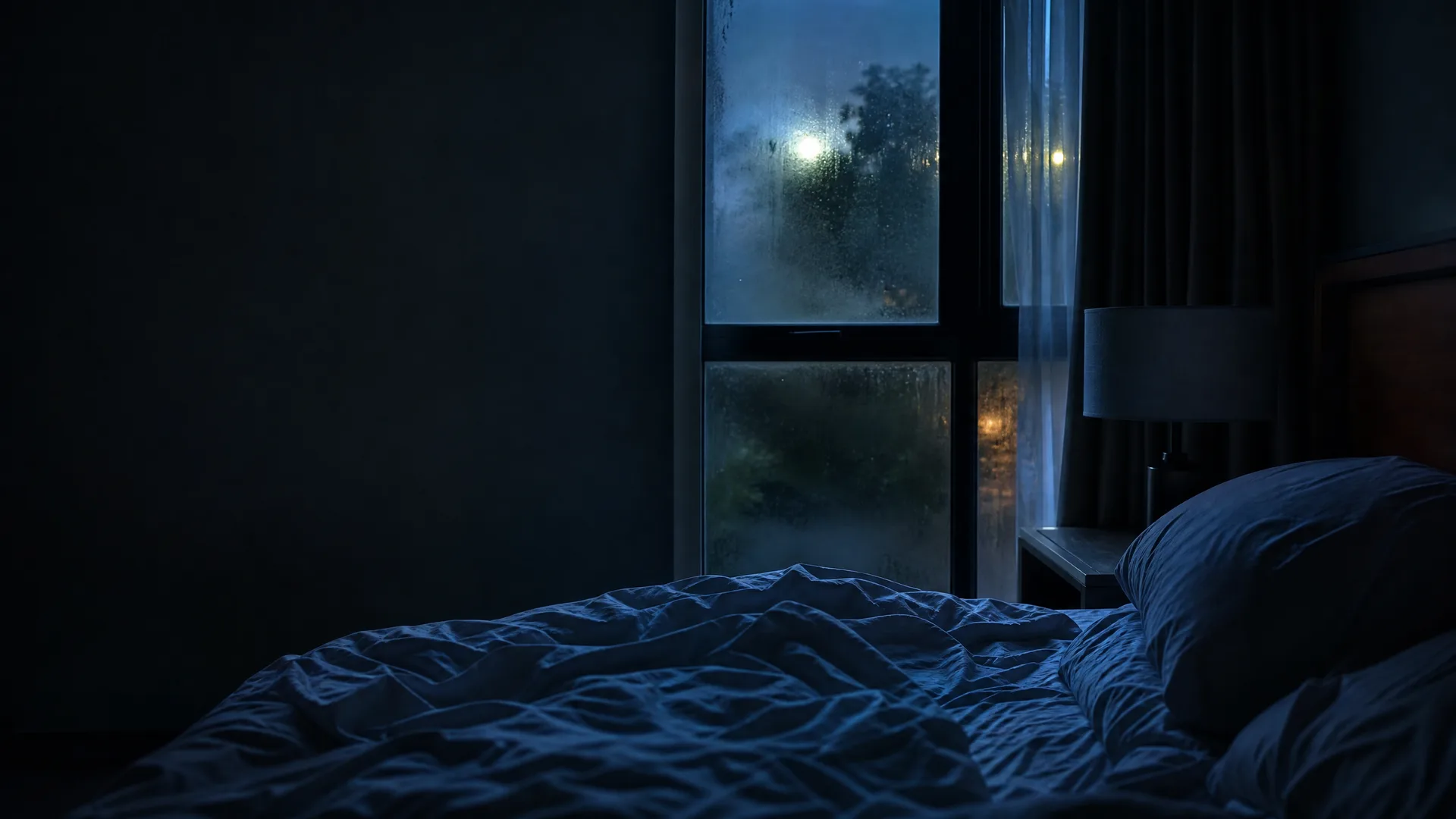
A dark bedroom at night with a rumpled duvet and pillows on a bed beside a rain-streaked, condensation-covered window with distant lights, a curtain, and a bedside lamp.

It's past eleven on a January night and you're already in bed when it starts, a clanking out past the bedroom wall where the unit sits on its pad. Not the usual whoosh and fan-down you've heard a hundred times this winter. This one keeps going, on and off, every few minutes, loud enough that you're lying there listening instead of sleeping. The room's getting colder than it should be for the thermostat setting. You pull the blanket up and tell yourself you'll check it in the morning, but you're still awake at midnight, still hearing it, doing the math on how many nights this has been going on now.
A closed dark laptop and a ceramic mug of coffee on a wooden dining table, with wooden chairs, a dark kitchen cabinet with cutting boards and a potted plant, and a leafy plant by a window in the background.

A noise that wasn't there before is worth checking

Defrost is normal. A whoosh, a fan slowing down, maybe some steam off the coil, that's a heat pump doing what it's built to do on a cold New Jersey night. A rattle that stays, a grinding that keeps coming back, or a clank that wasn't there last winter is something else. That's a part wearing out, and it won't fix itself by spring.

Finding a contractor on your own means searching around, calling a few, explaining the clanking and when it started more than once, then sitting with quotes trying to figure out which one actually knows heat pumps. Send the form instead and that part of it is off your plate. You'll still need the repair done, but you won't be the one tracking down who can do it.

Interior corner of a living room with a beige upholstered sofa and dark cushion in the foreground, a ceramic vase of leafy branches on a dark side table by a curtained window, a framed picture on the wall, and a wood-surround fireplace at right.
A dark wood cabinet with a paneled door and a ceramic pot of green foliage on top stands in a beige-walled room with white baseboard, a window at left, hardwood floor, and a patterned area rug.
A dark wood glass-front cabinet holding folded towels, woven baskets and a ceramic vase stands in a bathroom corner beside a window, with a potted fern and stacked towels on top and a freestanding tub partly visible at left.
A woven basket holding a green cushion and a cream fringed knit throw sits on a wood floor in a room corner beside a window and a dark wooden cabinet.
Corner of a room with a dark wood cabinet topped by a round vase, a linen curtain at a window, white baseboard, oak plank flooring with sunlight patches, and a woven jute rug in the foreground.
A dark wood sideboard against a pale wall holds a shallow stone bowl and a round ceramic vase with leafy branches, with sunlight from a curtained window falling across the wall, wood floor and woven rug.

Let someone else find the pro

Answer a few questions instead of calling shop after shop.

I'm done searching

Asking costs nothing, and the choice to hire stays yours.