A normal defrost cycle
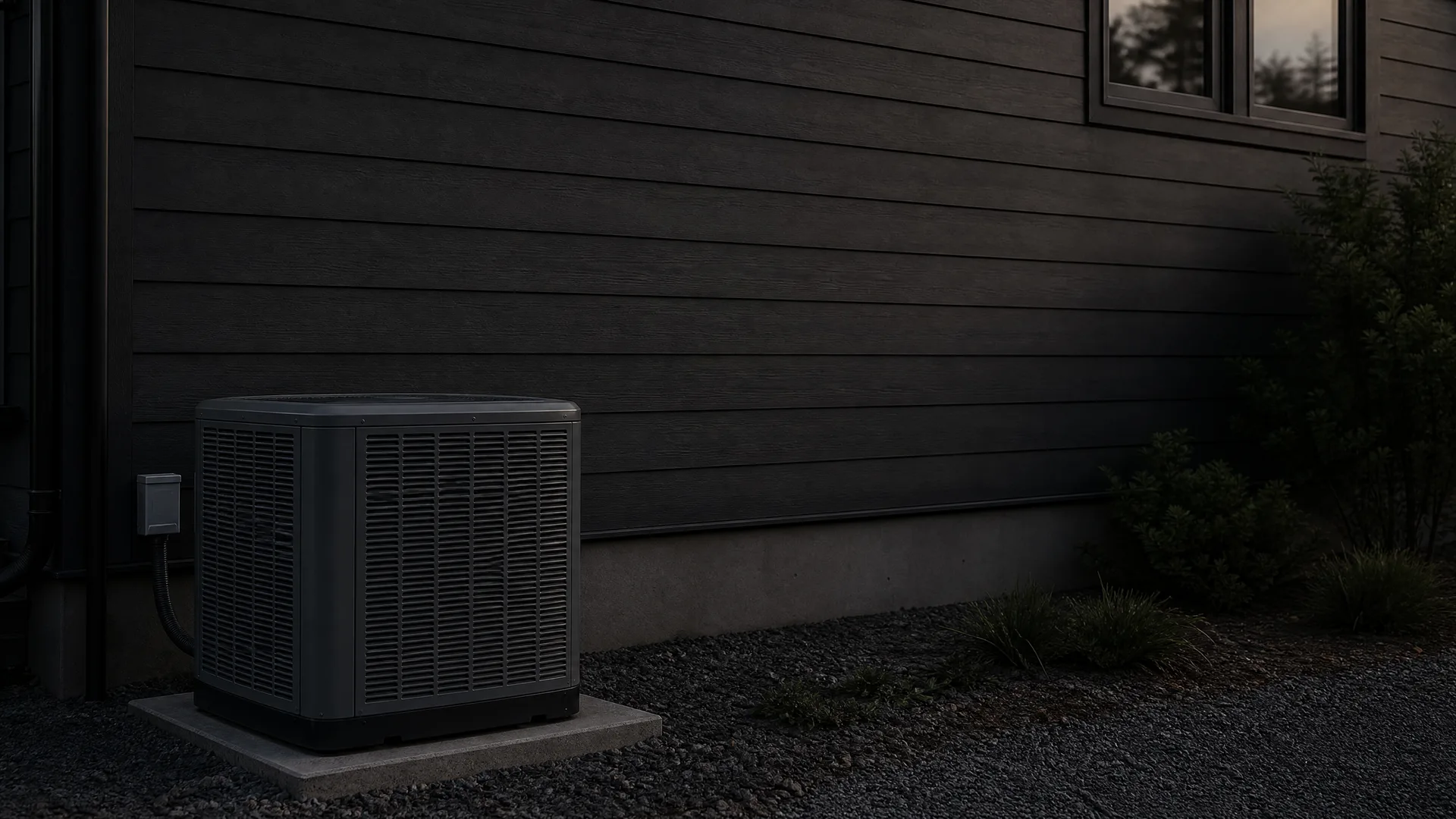
Thin frost along the base melts off within an hour or two, and the fan spins freely once it clears. The coil underneath is visible through the fins. It runs, it defrosts, it goes back to heating your house.
 Get a heat pump pro
Tell a local repair pro what your heat pump is doing.
A little frost along the bottom of the outdoor unit is normal on a cold New Jersey morning. A heat pump defrosts itself on a cycle, melts that frost off, and keeps running. What is not normal is a thick layer of ice covering the coil, ice on the fan, or ice that is still there hours later. That means the defrost cycle isn't doing its job, and something in the system needs a look.
A few things cause it. A low refrigerant charge keeps the coil colder than it should run. A failed defrost control board or a bad sensor means the unit never gets the signal to switch into defrost. A fan motor that's slowing down or stuck won't pull enough air across the coil to keep ice from building. Any of these can turn a quick five minute defrost into a block of ice that doesn't go away on its own.
Left alone, it gets worse before it gets better. Ice blocks airflow, the system works harder to move heat it can't move, and electric strip heat may kick in to cover the gap, which costs more on a power bill that's already among the highest in the country. Keep running it iced over and you risk damage to the compressor itself, which is the expensive part to replace.
This isn't something to wait out until spring. A contractor who works on heat pumps in New Jersey winters can tell you in short order whether it's the charge, the board, the sensor, or the motor, and get the ice problem solved before it costs you more in power or in a bigger repair.
Send the details of what you're seeing and someone who handles this equipment will reach out. Once that's done, you're not the one tracking down who's available or who knows heat pumps well enough to trust with it. That part is off your plate.
You've seen the frost before and let it melt off on its own, but this time the coil stays covered, the fan struggles, and the unit just can't keep up with a cold New Jersey night. You want to know if this is still normal or if something underneath has stopped working the way it should.
A heat pump is built to frost up and clear itself automatically. When ice builds instead of melting, something is stopping that cycle from finishing: a defrost control board that isn't switching over, a sensor giving it bad information, a reversing valve stuck in place, or low refrigerant charge. Any of those can leave the outdoor unit running in heating mode nonstop instead of pausing to defrost. On a cold New Jersey night, that ice keeps building instead of melting off, and the unit works harder to pull heat through a coil it can't actually use. Left alone, it can freeze the fan solid or push the system to shut down, which matters most on the night you're relying on it to keep the house warm.

Thin frost along the base melts off within an hour or two, and the fan spins freely once it clears. The coil underneath is visible through the fins. It runs, it defrosts, it goes back to heating your house.

The coil is buried under a solid white layer, thick enough to hide the fins underneath. The fan either can't turn or strains to. That's not a cold morning doing its job. That's a system that needs a look before a single-digit night asks more of it than it can give.




A heat pump buried in ice is not heating your house. It is running its compressor and getting nowhere, which means the rooms stay cold while the outdoor unit works harder and pulls more power doing it. New Jersey electric rates are already among the highest in the country, so a heat pump stuck in a defrost loop or fighting a frozen coil shows up fast on the bill. Keep it running iced over and you risk the compressor itself, the most expensive part to replace. If gas heat backs up your home, you have a cushion while this gets sorted. If the heat pump is what keeps your rooms warm overnight, ice that won't clear is the difference between a house that holds its temperature and one that doesn't, on a night when it matters most to the people in it.


Send the request and finding a pro stops being your problem.
No fee to send it, and nothing to sign.
A heat pump reverses itself for a few minutes every so often, sending hot refrigerant through the outdoor coil to melt off frost before switching back to heating your house. A sensor or timer tells it when to start that cycle and when to stop. If that sensor is reading wrong, or the reversing valve sticks, the unit never gets the signal to defrost, or it defrosts and switches back too soon. Either way the frost that should have melted in an hour is still there the next morning, and it builds on top of itself every night the problem goes uncorrected.
The outdoor coil needs air moving through it to work at all. A fan motor running slow, a blocked grille, or a low refrigerant charge all starve that airflow, and a coil that isn't shedding heat properly stays cold enough for frost to grip rather than melt. Low refrigerant does the same thing from the inside, dropping coil temperature below what a normal defrost cycle can clear. Once ice covers enough of the coil, it blocks the airflow further, so the problem feeds itself. A contractor checking charge and airflow together is how the actual cause gets found.


A heat pump that defrosts on its own clears the ice within an hour or two and goes back to heating your house. One that can't keeps adding more ice on top of what's already there, cycle after cycle.
A heat pump stuck in that second pattern needs a reversing valve, a defrost sensor, or a low refrigerant charge looked at before another cold night in New Jersey asks more of it than it can give.
At 22.48 cents per kilowatt-hour, a heat pump stuck defrosting isn't just failing to warm your house, it's doing it at the highest power rates in the country. An iced-up unit running nonstop adds up fast on a bill you're already watching through a cold winter.
EIA-861 2025 statewide residential average

The coil is clean, the fan turns without resistance, and the unit sits clear of leaves and debris. Air moves through it the way it's supposed to, so the defrost cycle does its job in an hour or two and the heat pump goes right back to warming your house.

Dirty coil fins and dead leaves piled against the base block the airflow a heat pump needs to defrost itself. Once that airflow is cut off, frost builds faster than the unit can clear it, and ice takes hold instead of melting away.

A little frost that melts off on its own is just your heat pump doing what it's built to do. Ice that keeps building, on the coil, the fan, or anywhere else, means the defrost cycle isn't finishing the job, and the unit will keep running without warming your house until someone fixes what's stopping it.
You don't have to figure out whether it's the reversing valve, a failed sensor, or a fan that's lost its clearance. Once you send the request, the job of finding the right contractor for your situation is off your plate. Someone who handles heat pump repair in New Jersey will reach out to you directly, and you can get back to the rest of a cold week.

After this form, you can stop searching for a heat pump pro.
